Games — Defining a zero-to-one gaming vertical from strategy to beta launch
PRODUCT DESIGN • DIGITAL GAMES
OVERVIEW
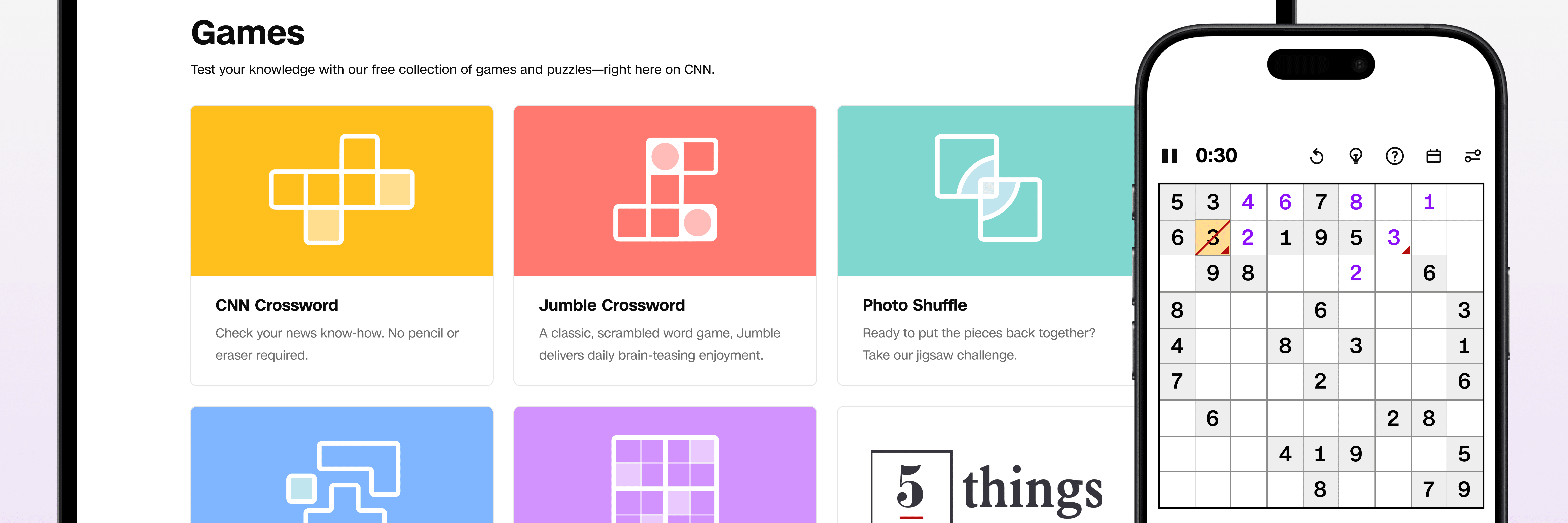
CNN Games is currently in Beta. As the UX design lead, I mapped the user funnel end-to-end and used it to drive this low-resourced project forward, partnering with 12+ cross-functional teams to take Games from concept to a successful beta launch.
ROLE
Design Lead
TEAM
CNN Growth
TIMELINE
Q3 2024
SKILLS
0→1 Design
Product Strategy
WHY GAMES?
Games as a growth strategy
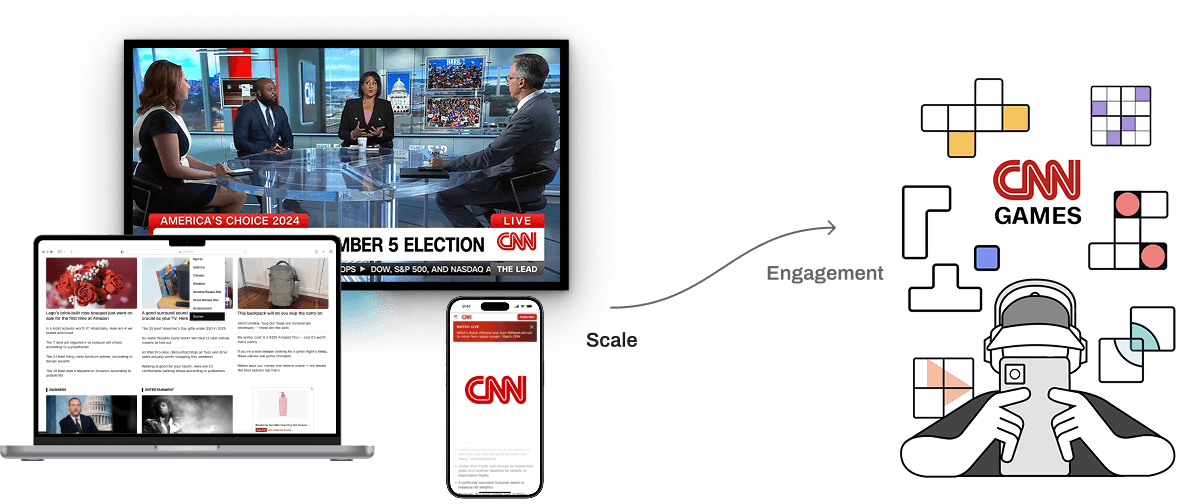
CNN is a global journalistic powerhouse with extensive reach, yet its user funnel indicates an opportunity to deepen engagement. To move beyond scale and increase revenue, CNN needs to develop direct relationships with its users, becoming essential every day.
Digital games are a strategic asset for publishers seeking to increase user engagement and time spent on site while diversifying revenue streams. They provide a dynamic form of content that can attract and retain a diverse audience. From a user perspective, games offer a fresh way to engage with news content, providing both convenience and relaxation.
HMW deliver an integrated Games experience that can be used to understand user engagement?
The long-term success of Games will rely on CNN's ability to create differentiated games, while in the short term, partnering with a white-label game provider for a beta launch allows the company to test engagement quickly and at low cost.
MY ROLE
My role in launching games 0→1
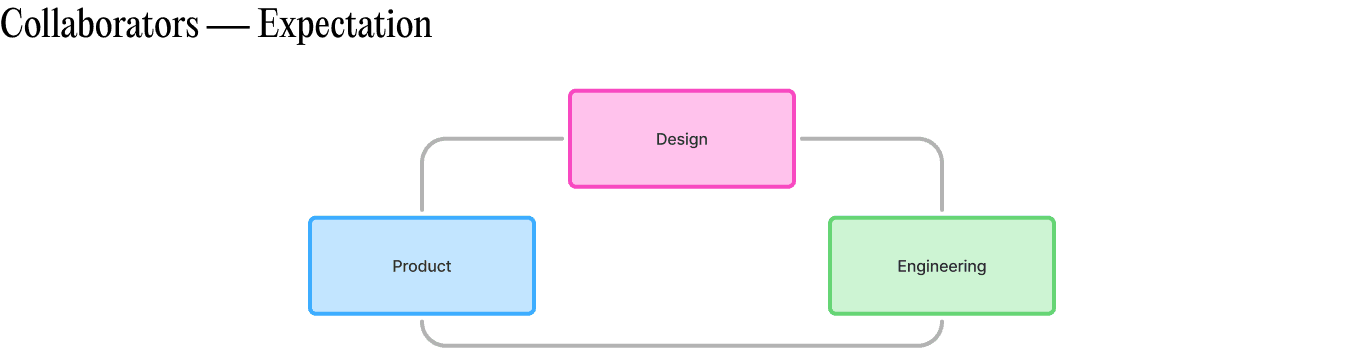
In a typical project, the PM might work with the designer to shape the experience while discussing expectations with the engineer.
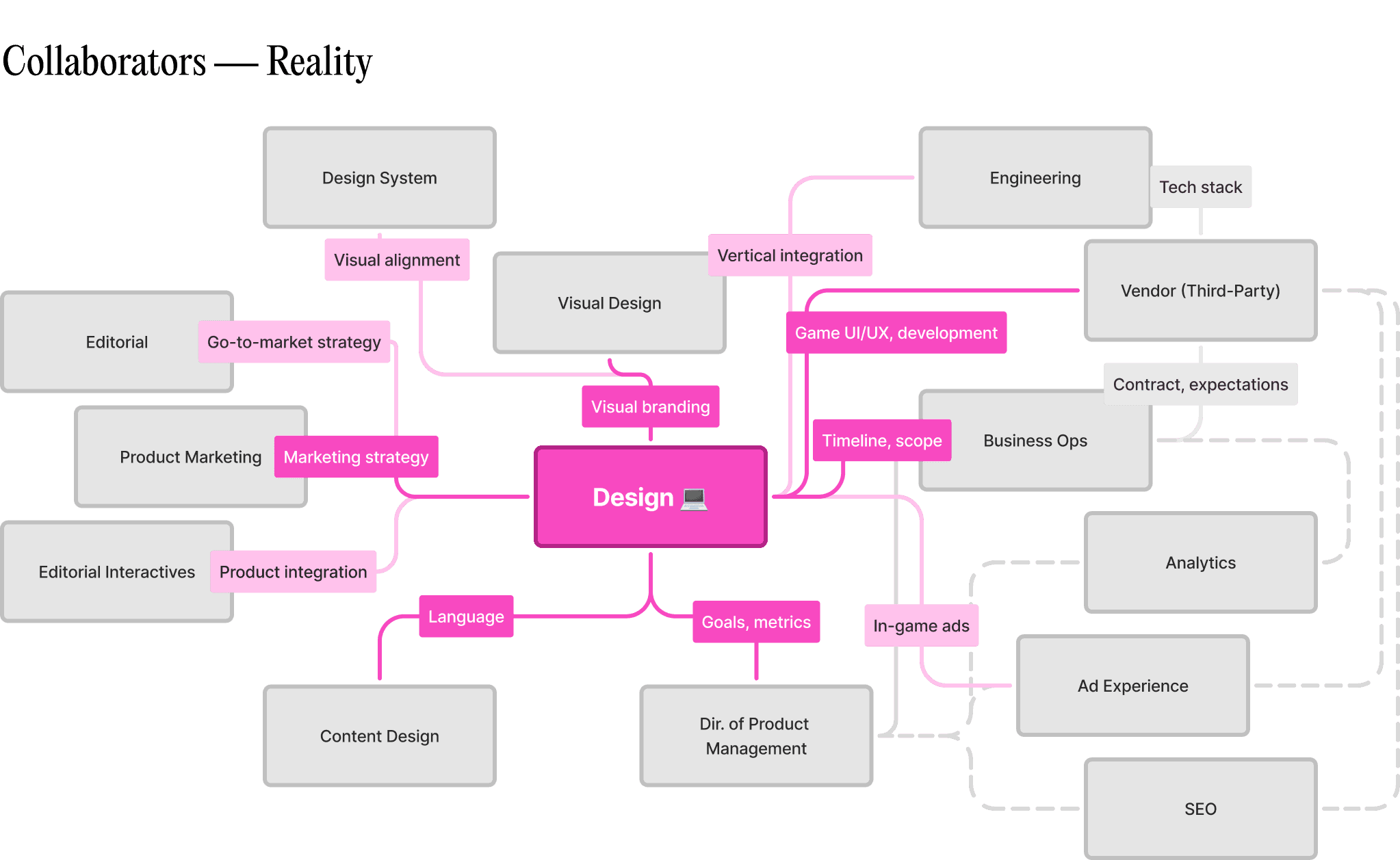
However, because (1) the product-person for this project was the VP of Growth, who was stretched across other priorities; (2) engineering was owned by the third-party vendor, not our team's engineers; and (3) Games was not the team's primary focus, I took leadership of the experience, identifying what needed to be built, who needed to be aligned, and what decisions needed to be made at each step.
SUCCESS METRICS
Beta launch results exceeded all engagement target metrics
80%↗
Users who arrive to Games section and click through to play a game
4.41m ↗
Average time spent on site
40% ↗
Users who come back the following day
FRAMEWORK
What does the user need here, and who do I need to partner with to deliver it?

I mapped the user funnel end-to-end and used it as my operating framework. My process was structured around a simple question at each stage: what does the user need here, and who do I need to partner with to deliver it?
At each step, I aligned with my design values: games should be (1) fun; (2) consistent with CNN's brand identity and overall journalistic environment; (3) scalable. Given the beta launch goal was to validate engagement, not visual differentiation, I optimized for speed and feasibility within the vendor's technical constraints, deferring deeper visual investment until the hypothesis proved out.
DISCOVERY
How will users find Games?
I partnered with Marketing and Editorial to build a promo strategy that targeted different user types across channels, from CNN loyalists to news enthusiasts and casual gamers. On-platform placements reach existing CNN audiences, and off-platform channels like Instagram reach the younger demographics CNN was actively trying to grow.
I coordinated the promotional visuals and content language across multiple teams through several rounds of iteration to ensure consistency. I also advocated for a dedicated homepage promo section using our own game visuals, rather than defaulting to editorial's standard Getty imagery. This helped to establish Games as its own brand.
Results: CTRs across web, email, and social outperformed established benchmarks. Instagram skewed 25-34, which aligned with CNN's audience goals. Roughly half of all clicks to Games came from organic discovery.
BROWSING
What do users land on?
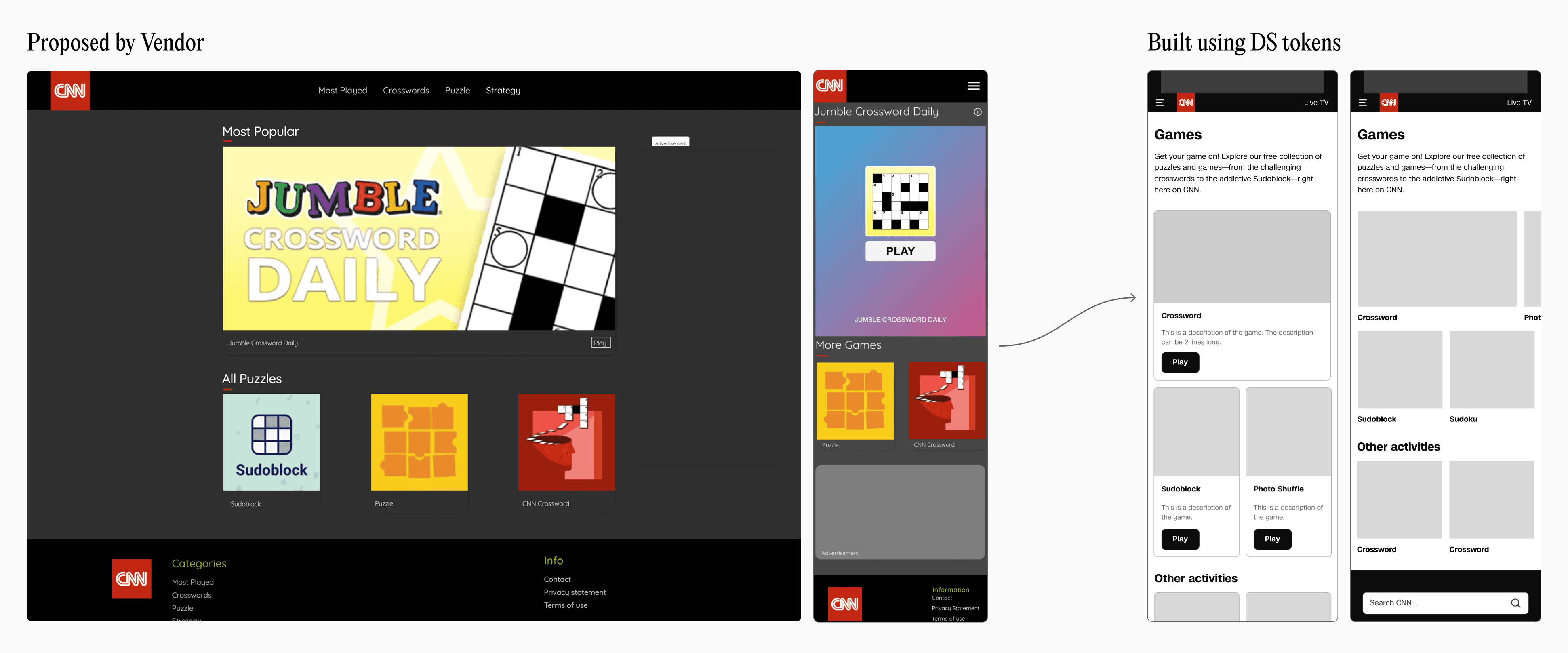
The vendor's default homepage was a dark, entertainment-style layout that strayed far from CNN's brand. Balancing fun with brand consistency and scalability, I decided to redesign it around CNN's identity, with a card-based grid and distinct visuals.
Designing and speccing cards
Cards were not yet documented in CNN's design system, so I did an internal audit of card components used across CNN. Each existing use case (newsletter hub, audio hub, election center) had been built differently.
What is the best card design I can produce using CNN design system tokens that the vendor's developers can replicate in code?
I built a version based on CNN's atomic design tokens, emphasizing visual branding. For consistency, I designed the cards to look similar to the ones used in the newsletter hub. Understanding limitations, I chose to implement a color change on hover for its lower engineering complexity. I specced the cards for vendor implementation and worked with the Design System team to contribute them back to the DS.
Information architecture
Beyond the cards, I made several decisions to integrate Games into CNN's existing product architecture while preserving its distinct identity. I kept the URL as cnn.com/games to match the format of CNN's other verticals, and added Games to the site's top navigation bar and footer, giving it legitimacy and discoverability.
Each game page includes a "More Games" section below, reducing dead ends. Games links back to CNN home, but with a simplified nav so that the experience is not buried in editorial noise.
ENGAGEMENT
What makes it feel like CNN Games?
I brought in the visual design team early to collaborate on creating a distinct branding system, with bold colors and iconography for each game. I shared a moodboard, competitive analysis, and homepage wireframe, and we explored a few different directions.
Visual iteration
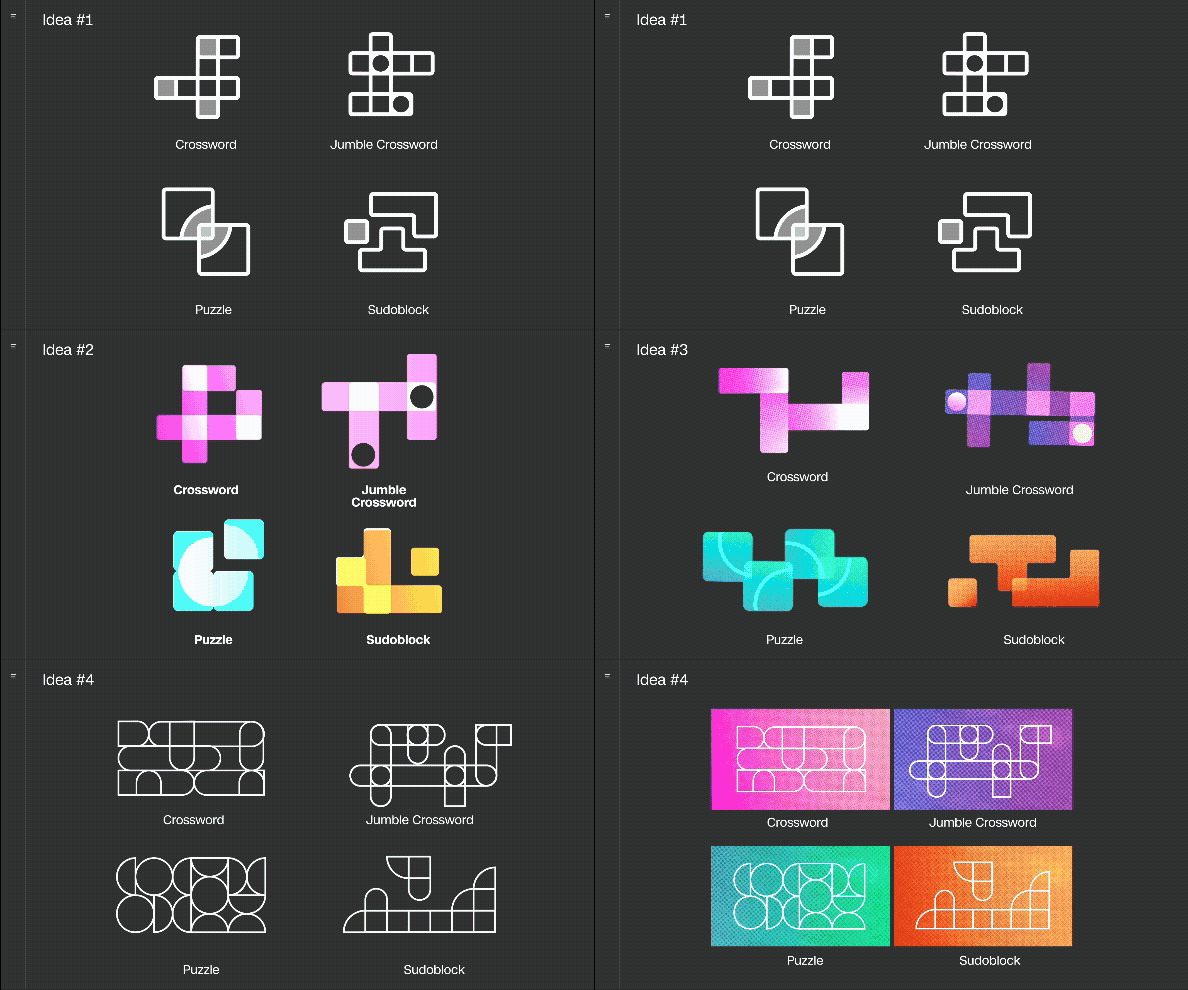
Initial concepts by visuals team

Distinct visuals for each game
Of the initial concepts, I pushed for the direction with the strongest branding potential. I hypothesized that using bright colors within CNN's design tokens, shapes simple enough that a user could see them and immediately name the game, as well as delightful animations that could be reused across promos and integrations would enable scalability and habit-building engagement.
Content design
The content design decisions made were equally as important. I worked closely with my content design partner on game names, homepage copy, descriptions, and taglines. We iterated on short and long variants to write content that was lighter in tone but still unmistakeably CNN.
Editorial & GTM strategy
I wanted Games branding to be consistent across all touchpoints to build visual familiarity with users from the moment they first came across Games. Editorial usually runs homepage promos using Getty images; however, I insisted on using these visuals for all homepage promos. I also asked the visual team to create social media assets with the same branding.
ECOSYSTEM
How do I build a vertical that is distinct yet integrated?
Originally, I'd planned a separate "Other CNN Activities" section below the main games cards to surface existing CNN interactives like the 5 Things Quiz (5TQ). However, when Road to 270 became a subscriber-only offering, 5TQ was the only remaining card in that section. Keeping it separate meant more scrolling, less discoverability, and maintaining a card format for only one item.
I decided to integrate 5TQ into the Games ecosystem by sending my specced designs to the Editorial Interactives editors to surface a Games banner at the bottom of the quiz and move it under the Games tab.
I considered rebranding the 5TQ visual to match the new Games identity, but since the 5 Things newsletter had a loyal following and strong brand recognition, disrupting that would have cost more than it gained. 5TQ now drives 6% of clicks to Games.
MONETIZATION
What is the right ad experience for a beta?
We had planned to surface ads within the experience, but the beta goal was engagement, not revenue. I worked with the in-house business development team to flesh out requirements and with the advertising team to consider options. I stayed firm on minimal steps to get to game start and having the CTA, "Play now," be truthful.
For the beta, we decided on video ads that triggered at the end of a game, or optionally by the user as a hint reward. There is no autoplay with sound and no full-screen takeovers. Ads are 30 seconds max, with only one video ad per session and one display ad in the header. Balancing monetization with a smooth gameplay experience, these were firm decisions made to protect a product still building its user base.
PROTOTYPE
Browse and play CNN Games
Navigating from CNN home to Games, then to Sudoku, a version of the classic game that I designed
NEXT STEPS
Beta validated the hypothesis. Next, shift our focus from engagement to retention
Player progression
How will players track their achievements over time? Introduce social features like leaderboards.
Community engagement
Encourage sharing achievements, discussion, providing feedback. Foster a sense of anticipation and excitement for daily games.
Build habit
Grow habitual user base through mechanisms such as rewards, competition, personalization, and mobile app integration.
TAKEAWAYS
Driving strategy and making product calls to balance brand consistency with engaging gameplay
Challenges
Balancing brand consistency with engaging gameplay in a vendor partnership: I worked to integrate a fun and light experience within CNN, while working within the limitations of a vendor partnership.
Owning product thinking: I learned to navigate the complexities of working with limited resources, taking on product strategy and XF leadership.
Learnings
There is high intentionality and potential for games: Initial engagement metrics signal a clear user appetite for games, validating our hypothesis and encouraging future ambitions.
Compromise, but not without asking why: Working within a vendor partnership and constrained design system meant lots of negotiation. I learned to pick my battles, but never without losing the vision.